
Enterprise Software Engineering & IT Infrastructure Architectures
Systemic development of scalable software solutions, high-throughput data processing pipelines, and cloud administration frameworks engineered for operational continuity.

Cloud Administration, Virtualization & Server Hosting

Systemic Information Administration
24/7 monitoring of active system environments, proactive patch management, and hardware virtualization controls.
Cloud Orchestration & Containerization
Managing automated cloud infrastructure nodes utilizing container orchestration frameworks to maintain continuous delivery.
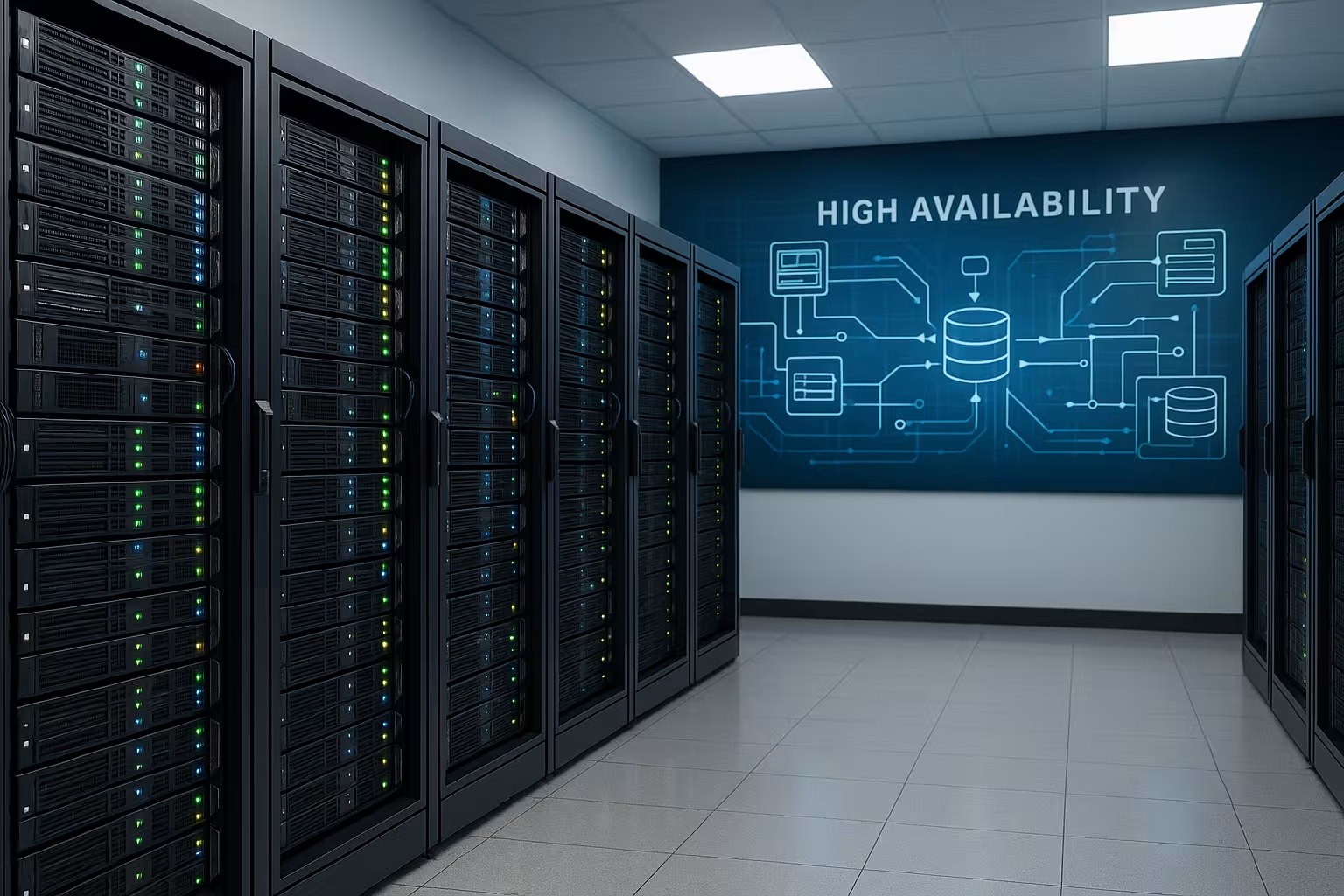
High-Availability Server Hosting
Deploying resilient server topologies optimized for zero-downtime execution, load balancing, and resource elasticity.

Custom Software Engineering & Modular Microservices
The software engineering matrix of M.A.N. Bau s.r.o. delivers mission-critical enterprise applications designed for high load, structural flexibility, and fault-tolerant architecture. By utilizing decoupled microservices paradigms, back-end codebases achieve seamless interoperability across heterogeneous environments. Engineering protocols cover the full software development lifecycle—from conceptual domain modeling and API orchestration to continuous deployment pipelines.
Digital Transformation & Enterprise Process Automation
Modern business continuity requires the elimination of manual operational bottlenecks through algorithmic workflow automation. M.A.N. Bau s.r.o. structures end-to-end digital transformation roadmaps, integrating enterprise resource platforms, automated ingestion interfaces, and cross-departmental data bridges. Systems are engineered to minimize operational friction, reduce administrative execution latency, and secure dynamic scaling capabilities.

High-Throughput Data Processing & Information Systems Management
Information systems administration mandates rigid protocols for raw data extraction, structural transformation, and secure analytical storage. The operational frameworks deployed by M.A.N. Bau s.r.o. process high-volume data streams through fault-tolerant ETL architectures. Real-time stream processing engines ensure immediate data availability for business intelligence applications while enforcing encryption during data-at-rest and data-in-transit cycles.
Scalable Web Portal Engineering & Continuous Maintenance
Corporate web portals function as primary digital execution gateways for client interaction and systemic access. Web architecture protocols focus on multi-tenant portal stability, high-frequency request handling, responsive interface rendering, and strict access governance. Continuous portal accompaniment protocols include technical vulnerability patching, performance optimization, content delivery network (CDN) tuning, and real-time threat neutralization.


Cybersecurity Protocols & Information Resilience Directives
To protect corporate assets and maintain uninterrupted operational workflows, information security mechanisms are embedded directly into software architecture layers. Encryption protocols adhere to international enterprise standards, utilizing isolated credential vaults, multi-factor authentication nodes, and automated threat isolation algorithms. Systemic redundancy frameworks guarantee complete operational restoration in the event of hardware failure or network anomalies.
Strategic Technology Consulting & Systemic Audits
Enterprise Architecture Assessment — Independent evaluation of current IT infrastructure topology, technical debt, and modernization vectors.
Cybersecurity & Access Governance — Comprehensive review of operational security parameters, credential isolation, and risk exposure.
Vendor-Neutral Technology Selection — Strategic guidance on software stack deployment, infrastructure provider migration, and licensing optimization.
Systemic Scalability Planning — Engineering long-term roadmap blueprints for cloud capacity expansion and data pipeline throughput.
Review Regulatory Compliance Protocols
The Imperative of Decoupled Software Architectures
Monolithic software systems represent an escalating risk factor for enterprise operations. As operational complexity expands, monolithic codebases introduce severe regression risks and scalability bottlenecks. The transition toward microservices and event-driven architectures allows discrete functional domain isolation. This decoupled approach ensures that individual system component updates or performance spikes remain contained, maintaining enterprise platform availability.
Cloud Hybridization and Infrastructure Sovereignty
Modern infrastructure policy requires a balance between cloud elasticity and strict data localization laws. Deploying hybrid multi-cloud topologies allows organization-critical computational tasks to execute within dedicated high-security environments while leveraging public cloud infrastructure for peak computational elasticity. Structural redundancy across geographically distributed data centers guarantees operational resilience against localized outages.
Automated Governance and Continuous Infrastructure Integration
Systemic stability relies on automated continuous integration and continuous deployment (CI/CD) pipelines coupled with real-time operational telemetry. Automated regression testing and automated security audits eliminate human error from deployment workflows, securing corporate software portals against unexpected failure vectors.
Systemic Transition to Operational Coordinates
To examine specific technical capabilities, software engineering frameworks, or compliance directives, proceed to the specialized internal gateways.